Frank Anaya · Selected work
I design the experience and ship the code that delivers it.
Web platform engineer and UX designer. I run semashow.com — a million visits a season — on a two-person team, and I've spent a decade inside the design process of one of the world's largest multilingual web platforms.
Contact / connect · Ontario, CA · Remote or hybrid
Brands I've built for
Trained engineers at
Live properties
The sites, in production right now.
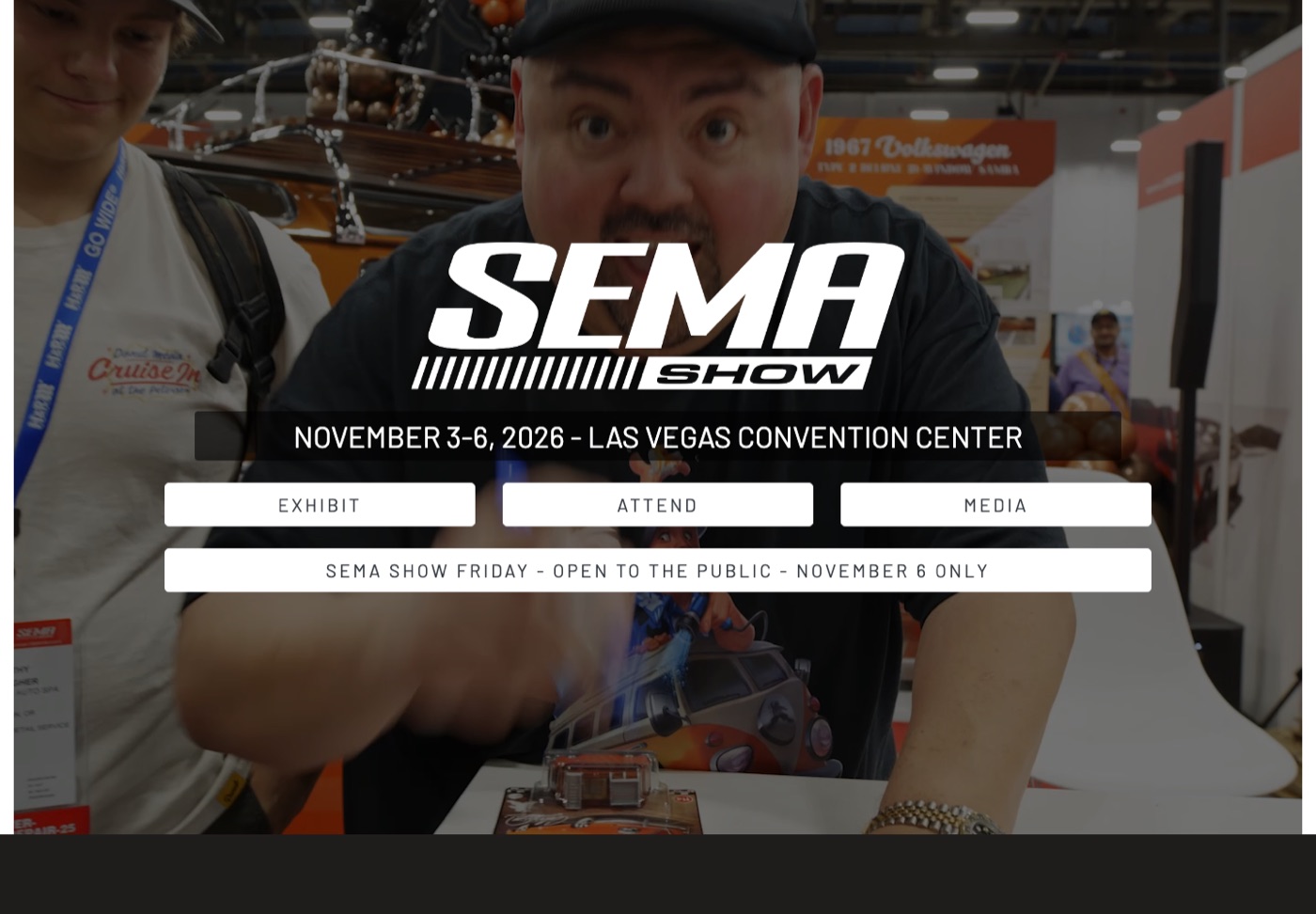
semashow.com — the SEMA Show
160,000+ attendees, 1M+ visits a season. Mine end to end on our two-person team: Drupal 11, headless Astro frontend, Cloudflare edge, the design system, and the SEO-parity cutover. Case study → live site ↗
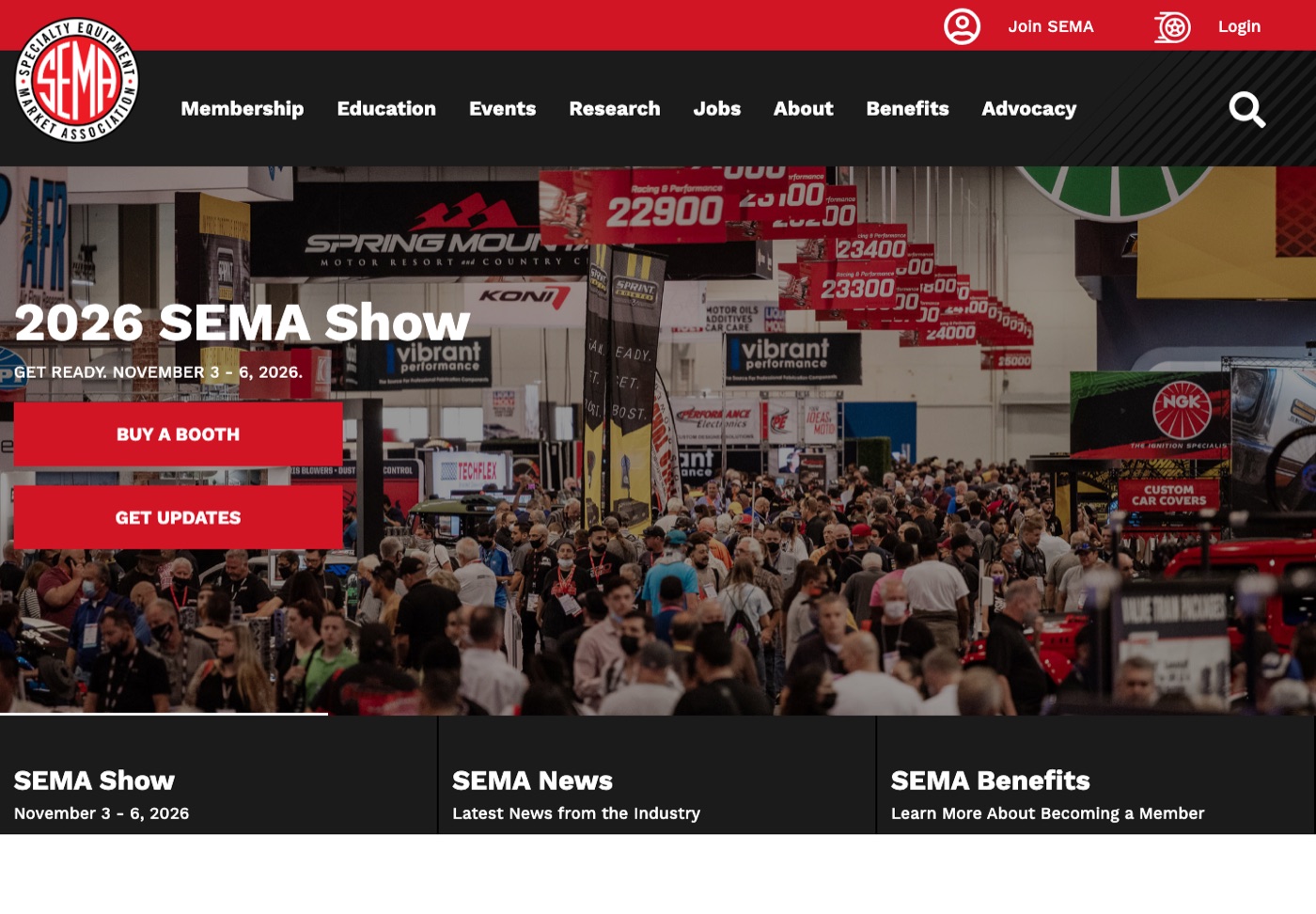
sema.org — the association
The trade association's flagship property, which our team manages. Currently being redesigned with an external vendor — I'm the client-side UX lead, running the usability testing rounds and turning findings into vendor direction. UX case study → live site ↗
Earlier & ongoing
Global nonprofit platform
UX/UI representative & tool builder (volunteer) · 2016 – present
One of the world’s most-visited, most-translated web platforms. Full SDLC: feature intake, design reviews, usability testing, internal tooling.
calspas.com · colemanspas.com
Web developer — Cal Spas & Coleman Spas · 2013 – 2015
5+ responsive corporate sites across both brands: development, performance optimization, marketing partnership.
viewsonic.com
Web developer intern — ViewSonic · 2012 – 2013
Front-end development and WordPress CMS management for a global hardware brand.
Case studies
Four pieces of work, told straight.
Re-platforming a million-visit event site with zero SEO loss
A 15-year-old legacy CMS to Drupal 11 + headless Astro on Cloudflare. The cutover was decided by an automated parity suite, not a gut call.
Read the case study →One mental model instead of five
Editors fought five competing page structures. I redesigned the IA to a single page type with five variants and wrote down why.
Read the case study →A design system that survives a million visits
30+ components on a token architecture. One design language across five very different page experiences, with accessibility built in.
Read the case study →A year of running AI agents in production
Custom agent skills, runbooks, and validation gates on a live platform. What worked, what failed, and the judgment in between.
Read the case study →Beyond the code
The skills that don't fit in a stack line.
I teach engineers, professionally.
A year as a corporate technical trainer, on-site at AT&T, Verizon, and Chase — 200+ engineers trained on Splunk and Selenium at 95%+ satisfaction. Add eight years of classroom teaching and you get the rare thing: an engineer who can make a skeptical room actually adopt a new tool.
I speak your users' languages.
Bilingual English/Spanish, conversational French and Portuguese, and ASL. A decade designing for one of the most multilingual audiences on the web taught me that language access is architecture, not translation bolted on at the end.
I write things down.
Fifteen architecture decision records, a runbook for every production gotcha, and documentation written so both engineers and AI agents can act on it. Teams don't lose knowledge because people leave; they lose it because nobody wrote it down.
Free field guide
The Production AI Field Guide.
The 7-step checklist, the 4-layer stack, and the toolbelt I use to run AI agents on a real codebase. One page you can act on this week. Free — steal it, share it with your team.
Perspective
What a year in the trenches taught me.
Positions I'll defend in any room, earned on a live platform rather than borrowed from a keynote. The full framework lives on the method page.
AI produces velocity only when someone builds the scaffolding.
Agents don't fail for lack of intelligence; they fail for lack of context. Skills that encode conventions, runbooks both humans and agents read, validation gates in front of everything they produce — that's the actual work of AI adoption, and most teams skip it.
Deterministic first. The model is the last resort, not the first.
A 30-line script that solves a problem forever beats re-prompting an LLM every week. Knowing which tasks are mechanical and which need reasoning is the judgment that keeps AI budgets from evaporating.
Accessibility is an engineering discipline, not a compliance chore.
I taught the students who depend on assistive technology before I built for them. Semantic structure, keyboard paths, and automated auditing belong in the build gate — because retrofitting empathy is more expensive than designing with it.
The short version
Fourteen years building for the web. B.S. in Computer Information Systems, summa cum laude. Bilingual English/Spanish. I write decision records while I build, I test accessibility because I used to teach the kids who depend on it, and I'd rather show you the commit history than adjectives.